
Ethanol Industry Seeks Changes to CAFE-III Norms, Flags Bias Towards EVs
The All India Distillers' Association has asked the Ministry of Petroleum and Natural Gas to revise draft CAFE-III norms, raising concerns over policy treatment of flex-fuel vehicles compared to electric vehicles.
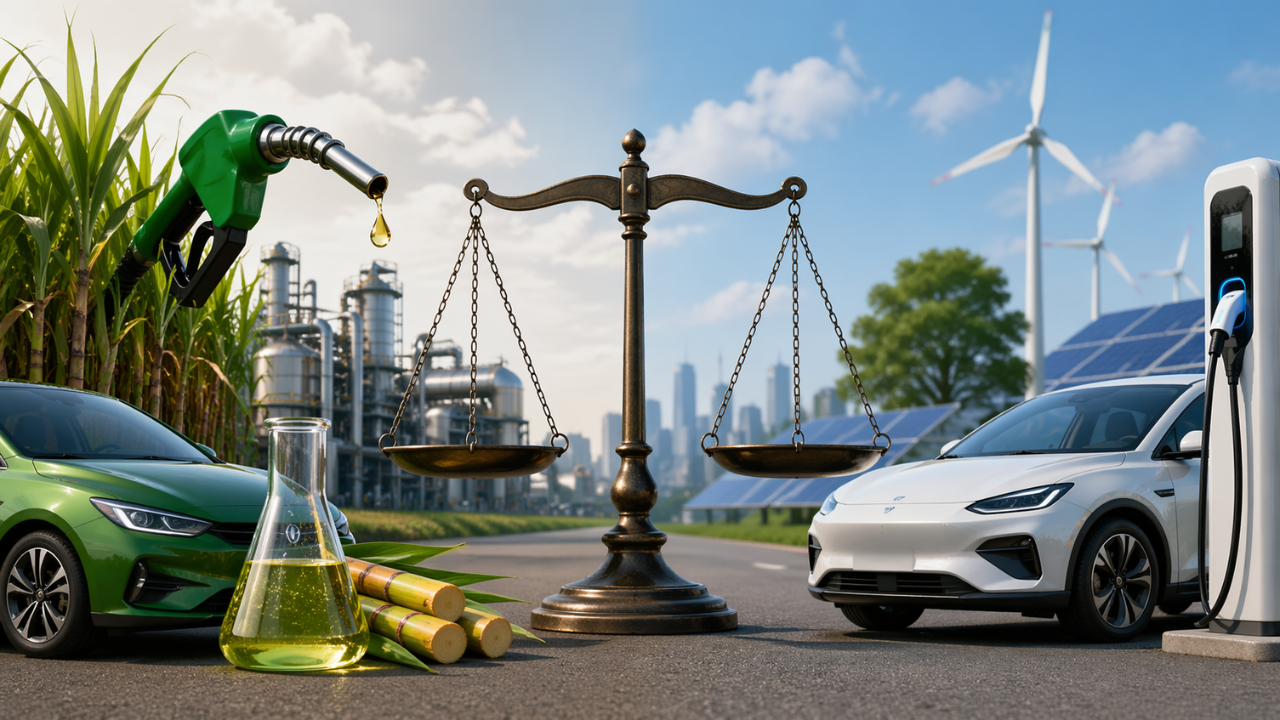
The All India Distillers' Association (AIDA), representing ethanol manufacturers, has approached the Ministry of Petroleum and Natural Gas regarding the draft Corporate Average Fuel Consumption (CAFE-III) norms for FY 2027–28 to FY 2031–32. In a letter dated April 22, 2026, addressed to Neeraj Mittal, Secretary at the ministry, the association stated that the current framework gives greater regulatory support to battery electric vehicles (BEVs) and plug-in hybrid vehicles.
Also read: Zelio E-Mobility Introduces Gracy Electric Scooter at RideAsia EV Expo
Concerns Over Incentive Structure
According to AIDA, the draft norms provide higher volume-based benefits to electric and hybrid vehicles, while flex-fuel vehicles (FFVs), which run on ethanol blends, are assigned a lower incentive factor of 1.1. The association has argued that this structure does not reflect the role of ethanol-based fuels in reducing emissions.
Key Recommendations Submitted
AIDA has outlined four main suggestions in its communication:
- Increase the volume derogation factor for FFVs to a range of 2.0–2.5
- Introduce a technology-neutral compliance framework covering electric, hybrid, and ethanol-based vehicles
- Align CAFE-III norms with the Ethanol Blending Programme (EBP), including future targets beyond E20
- Account for lifecycle emissions of ethanol production under regulatory calculations
Position on Ethanol-Based Mobility
The association has stated that flex-fuel vehicles can be deployed using existing fuel infrastructure. It also noted that ethanol production relies on domestic feedstocks, which may reduce dependence on imports linked to other energy pathways.
Elctrik Speaks
The discussion around CAFE-III norms reflects differing views on how multiple fuel technologies should be treated within policy frameworks. The outcome may influence how automakers balance investments across electric, hybrid, and ethanol-compatible vehicles in the coming years.